Importance of Iron in Pregnancy: Benefits and Daily Needs

Importance of Yoga in Pregnancy for a Healthy Mother and Baby
May 13, 2026
1st Trimester of Pregnancy: What Should You Know?
May 26, 2026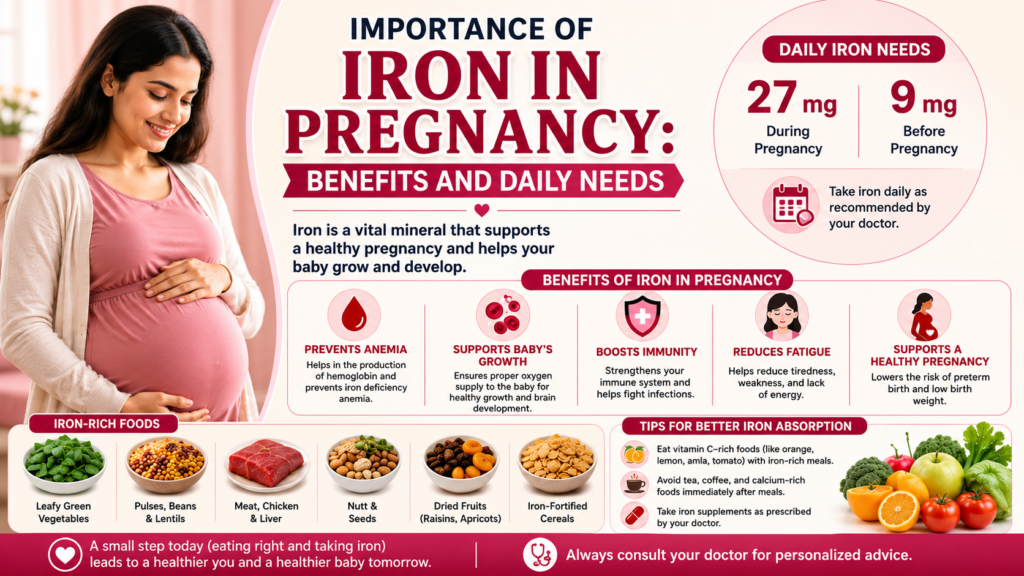
Pregnancy is a beautiful journey that brings many physical and emotional changes to a woman’s body. During these nine months, proper nutrition becomes extremely important for the health of both the mother and the growing baby. Among all essential nutrients, iron plays a major role in supporting a healthy pregnancy. Iron helps the body produce hemoglobin, a protein in red blood cells that carries oxygen to different parts of the body. During pregnancy, the body needs more blood and oxygen, making iron one of the most important nutrients for expecting mothers.
Iron deficiency is one of the most common nutritional problems during pregnancy. If ignored, it can lead to anemia, weakness, fatigue, and complications during childbirth. Understanding the importance of iron and maintaining the right intake can help mothers enjoy a healthier and safer pregnancy journey.
Why Iron is Essential During Pregnancy
During pregnancy, a woman’s blood volume increases significantly to support the growing fetus. This increase means the body needs extra iron to make more hemoglobin. Iron also supports the baby’s development, especially brain growth and healthy birth weight.
Without enough iron, the body cannot produce sufficient healthy red blood cells, which may reduce oxygen supply to the baby. This can affect both maternal health and fetal development.
Benefits of Iron During Pregnancy
1. Prevents Anemia
Iron helps prevent iron-deficiency anemia, which is common among pregnant women. Anemia can cause extreme tiredness, dizziness, shortness of breath, and weakness. Severe anemia may also increase the risk of premature birth and low birth weight.
2. Supports Baby’s Growth
Iron helps deliver oxygen to the baby through the placenta. Adequate oxygen is necessary for proper brain development and overall fetal growth.
3. Boosts Energy Levels
Pregnant women often feel tired due to hormonal changes and increased body demands. Proper iron intake helps improve energy levels and reduces fatigue.
4. Strengthens Immunity
Iron contributes to a healthy immune system, helping mothers fight infections during pregnancy.
5. Reduces Risk of Complications
Maintaining healthy iron levels may lower the chances of complications such as preterm delivery, postpartum depression, and low birth weight.
Signs of Iron Deficiency During Pregnancy
Many women may not realize they are low in iron until symptoms become severe. Common signs include:
- Constant fatigue
- Pale skin
- Weakness
- Dizziness
- Headaches
- Rapid heartbeat
- Shortness of breath
- Cold hands and feet
If these symptoms appear, it is important to consult a healthcare professional for proper diagnosis and treatment.
How Much Iron Does a Pregnant Woman Need?
Pregnant women generally require around 27 milligrams of iron daily. The requirement is higher than normal because the body is supporting both the mother and the growing baby.
Doctors often recommend iron supplements along with a balanced diet to maintain healthy iron levels during pregnancy.
Best Iron-Rich Foods for Pregnant Women
Including iron-rich foods in the daily diet is one of the best ways to prevent deficiency. Iron is available in two forms:
Heme Iron
This type is found in animal-based foods and is absorbed more easily by the body.
Sources include:
- Lean meat
- Chicken
- Fish
- Eggs
Non-Heme Iron
This type is found in plant-based foods.
Sources include:
- Spinach
- Beetroot
- Lentils
- Beans
- Tofu
- Nuts and seeds
- Whole grains
- Dry fruits like raisins and dates
Vitamin C Helps Iron Absorption
Vitamin C improves the body’s ability to absorb iron. Pregnant women should include foods rich in vitamin C along with iron-rich meals.
Examples include:
- Oranges
- Lemon
- Tomatoes
- Guava
- Strawberries
- Amla
For example, drinking lemon water with meals or eating fruits alongside iron-rich foods can improve iron absorption.
Foods That Reduce Iron Absorption
Certain foods and drinks may reduce the body’s ability to absorb iron if consumed in excess, such as:
- Tea
- Coffee
- Soft drinks
- Calcium-rich foods taken with iron supplements
Doctors usually recommend avoiding tea or coffee immediately after meals.
Importance of Iron Supplements
In many cases, diet alone may not be enough to meet iron requirements during pregnancy. Doctors may prescribe iron tablets or supplements, especially during the second and third trimesters.
Iron supplements should only be taken as advised by a healthcare professional because excessive iron intake may also cause side effects such as:
- Constipation
- Nausea
- Stomach upset
- Dark stools
Drinking plenty of water and consuming fiber-rich foods may help reduce constipation caused by iron supplements.
Iron Deficiency and Pregnancy Risks
Ignoring low iron levels during pregnancy may increase several health risks, including:
- Premature birth
- Low birth weight
- Poor fetal growth
- Maternal fatigue
- Increased risk during delivery
- Postpartum recovery issues
Severe anemia may also require blood transfusions in some situations. Regular prenatal checkups help doctors monitor iron levels and recommend suitable treatment.
Tips to Maintain Healthy Iron Levels During Pregnancy
Here are some simple ways pregnant women can maintain healthy iron levels:
Eat a Balanced Diet
Include green leafy vegetables, fruits, whole grains, pulses, and protein-rich foods daily.
Take Supplements Regularly
Follow the doctor’s advice regarding iron and prenatal supplements.
Stay Hydrated
Proper hydration supports overall health and digestion.
Avoid Skipping Meals
Eating regular meals helps maintain energy and nutrient levels.
Attend Regular Checkups
Routine blood tests can help identify iron deficiency early.
Role of Healthcare Support During Pregnancy
Proper medical guidance is extremely important during pregnancy. Regular prenatal visits help monitor the mother’s nutritional health and the baby’s development. Expert doctors can recommend the right diet, supplements, and treatment based on individual needs.
Women looking for reliable Pregnancy Care in Sector 102 Gurgaon should choose healthcare providers who focus on complete maternal wellness, including nutrition management, routine health monitoring, and personalized pregnancy guidance.
Conclusion
Iron is one of the most important nutrients required during pregnancy. It supports healthy blood production, improves oxygen supply, boosts energy, and helps in the baby’s proper growth and development. Iron deficiency can lead to serious complications if left untreated, making regular monitoring and a healthy diet essential during pregnancy.
By consuming iron-rich foods, following medical advice, and maintaining regular prenatal checkups, expecting mothers can ensure a healthier pregnancy journey for themselves and their babies. Proper nutrition today lays the foundation for a healthy tomorrow for both mother and child.