Infertility in Women: Causes, Diagnosis & Treatment

Uterine Fibroids: Symptoms, Causes and Treatment
October 2, 2026
Preconception Care: How to Prepare Your Body for Pregnancy
October 8, 2026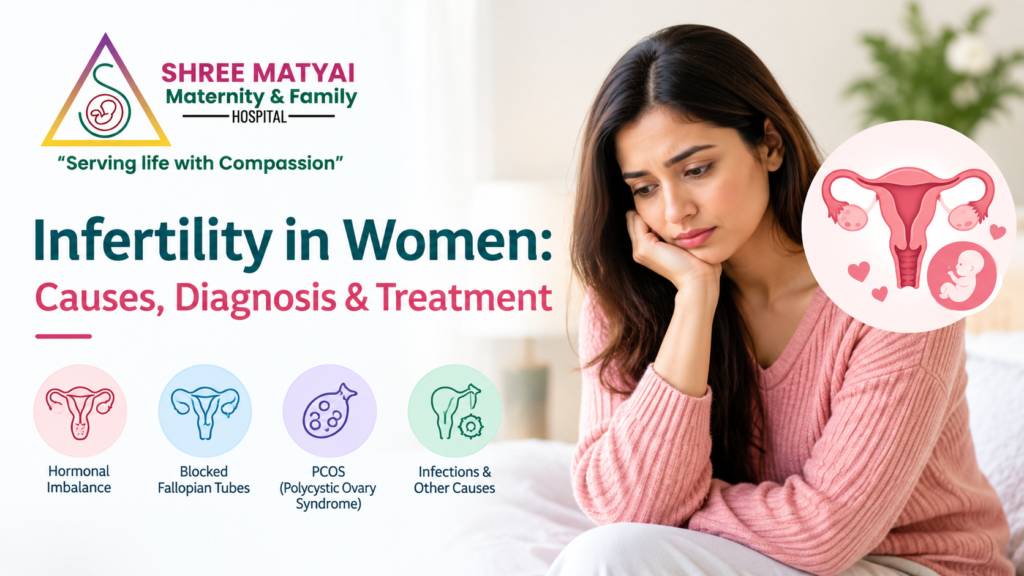
Infertility in women means difficulty becoming pregnant after regular, unprotected intercourse for a defined period. It may be related to ovulation, fallopian tubes, the uterus, hormones, age, or other health factors. Understanding the possible cause matters because many fertility conditions can be evaluated and treated. Shree Matyai Hospital provides professional women’s healthcare guidance for patients who need fertility evaluation.
Women seeking Infertility Treatment in Sector 102 Gurgaon can discuss symptoms, medical history, and suitable investigations with a qualified doctor. Early assessment does not necessarily mean a serious problem exists; it helps identify possible barriers to conception and supports informed treatment decisions. It also helps couples understand realistic options, expected timelines, and when specialist care may be appropriate for their situation.
Fertility challenges can occur at different stages of life, and symptoms may be absent. Evaluation can determine whether the concern involves ovulation, reproductive anatomy, ovarian reserve, sperm factors, or several issues together.
What Is Infertility in Women?
Infertility generally means not achieving pregnancy after 12 months of regular, unprotected intercourse when the woman is under 35. For women aged 35 or older, evaluation is commonly recommended after six months. Women over 40 may benefit from earlier assessment. A doctor may also recommend prompt evaluation when periods are absent or irregular, there is known endometriosis, previous pelvic infection or surgery, repeated pregnancy loss, or another fertility risk.
When Should You Seek Medical Advice?
Seek medical advice sooner if you have significant pelvic pain, very irregular cycles, known reproductive problems, or a condition that may affect fertility.
Why Early Evaluation Matters
Age, ovarian reserve, reproductive anatomy, general health, and both partners’ fertility factors can influence conception. Personalized assessment is more useful than online fertility calculators.
Common Causes of Infertility in Women
Several conditions can make conception difficult, and more than one factor may be present.
Ovulation and Hormonal Problems
Polycystic ovary syndrome (PCOS), thyroid disorders, high prolactin levels, major weight changes, excessive exercise, and some medicines can affect ovulation. Irregular or absent periods can be an important clue, although regular periods do not rule out every fertility problem.
Tubal, Uterine and Age-Related Factors
Blocked or damaged fallopian tubes can prevent sperm and egg from meeting. Pelvic infections, endometriosis, inflammation, and previous surgery may contribute. Fibroids, polyps, adenomyosis, and other uterine conditions can sometimes affect implantation or pregnancy. Age also matters because female fertility generally declines with increasing age.
Signs and Symptoms of Infertility in Women
There may be no obvious symptoms other than difficulty conceiving. However, irregular or absent periods, unusually heavy or painful bleeding, pelvic pain, pain during intercourse, or symptoms associated with PCOS may indicate an underlying condition.
How Is Infertility in Women Diagnosed?
Diagnosis starts with a consultation covering menstrual history, pregnancies, medical conditions, surgeries, medications, lifestyle, and how long the couple has been trying. Both partners may be assessed because fertility can involve male and female factors.
Common Fertility Tests
Depending on the situation, evaluation may include:
- Ovulation and menstrual-cycle assessment
- Blood tests for hormones and ovarian function
- Pelvic ultrasound of the uterus and ovaries
- Tests for fallopian-tube openness, such as hysterosalpingography
- Ovarian reserve testing when clinically appropriate
- Semen analysis for the male partner
Testing should be individualized; targeted investigations can avoid unnecessary procedures.
Treatment Options for Infertility in Women
Treatment depends on the cause, age, ovarian reserve, duration, and the couple’s preferences.
Medicines and Lifestyle Measures
Ovulation-inducing medicines may help women who do not ovulate regularly. Thyroid disorders and high prolactin can also be treated when they contribute to fertility problems. Maintaining a healthy weight, avoiding tobacco and recreational drugs, limiting alcohol, managing chronic conditions, and taking recommended prenatal folic acid can support preconception health.
Procedures and Assisted Reproductive Techniques
When blocked tubes, endometriosis, fibroids, or other structural problems are involved, medication or surgery may be considered. Depending on the diagnosis, fertility care may include intrauterine insemination (IUI) or in vitro fertilization (IVF). These are not automatically the first step; treatment should match the clinical situation.
Shree Matyai Hospital provides patient-focused evaluation and treatment planning, with a qualified specialist explaining benefits, risks, and alternatives.
Practical Steps That May Support Fertility
Healthy habits cannot guarantee pregnancy, but they support reproductive health:
- Track menstrual cycles and note major changes.
- Eat a balanced diet and maintain regular physical activity.
- Avoid smoking and recreational drugs.
- Limit alcohol and discuss caffeine with your doctor.
- Manage diabetes, thyroid disorders, and other chronic conditions.
- Take prenatal folic acid when advised.
- Avoid unverified fertility supplements without medical guidance.
Fertility evaluation is a shared process, so assessing both partners can make diagnosis more complete.
Quick Takeaways
- Causes can include ovulation, tubal, uterine, hormonal, or age-related factors.
- Irregular periods or pelvic symptoms may warrant earlier advice.
- Both partners may need evaluation.
- Treatment can include medicines, procedures, IUI, or IVF.
- Personalized care is safer than self-diagnosis.
Conclusion
Infertility in women can have multiple causes, and difficulty conceiving does not automatically mean pregnancy is impossible. The most useful first step is timely medical evaluation based on age, menstrual patterns, reproductive history, health conditions, and the fertility factors of both partners. Appropriate testing can identify a likely cause and guide treatment, whether that involves lifestyle support, medication, a procedure, IUI, IVF, or monitoring.
If you are planning pregnancy or have concerns about conception, speak with a qualified gynecologist rather than delaying care or relying on online self-diagnosis. Shree Matyai Hospital provides women’s healthcare support and professional guidance for evaluation. You can explore Maternity Hospital in Sector 102 Gurgaon for maternity and gynecology services and discuss the next step for your needs.
FAQs
1. What causes infertility in women?
Ovulation problems are common, but tubal, uterine, hormonal, age-related, and male factors can also contribute.
2. When should a woman seek fertility evaluation?
Generally, evaluation is advised after 12 months of trying if under 35, after six months if 35 or older, and earlier when risk factors or concerning symptoms are present.
3. Can infertility be treated without IVF?
Yes. Depending on the cause, treatment may involve lifestyle changes, medicines, treatment of underlying conditions, surgery, or IUI. IVF is used when clinically appropriate.
4. Can regular periods still be associated with infertility?
Yes. Regular cycles do not rule out blocked fallopian tubes, reduced ovarian reserve, endometriosis, or other reproductive factors.
5. Should both partners be evaluated?
Yes. Fertility concerns can involve either partner or both, so a complete evaluation may include assessment of male and female factors.