Uterine Fibroids: Symptoms, Causes and Treatment

Missed Periods but Not Pregnant: Common Causes and What to Know
September 29, 2026
Infertility in Women: Causes, Diagnosis & Treatment
October 6, 2026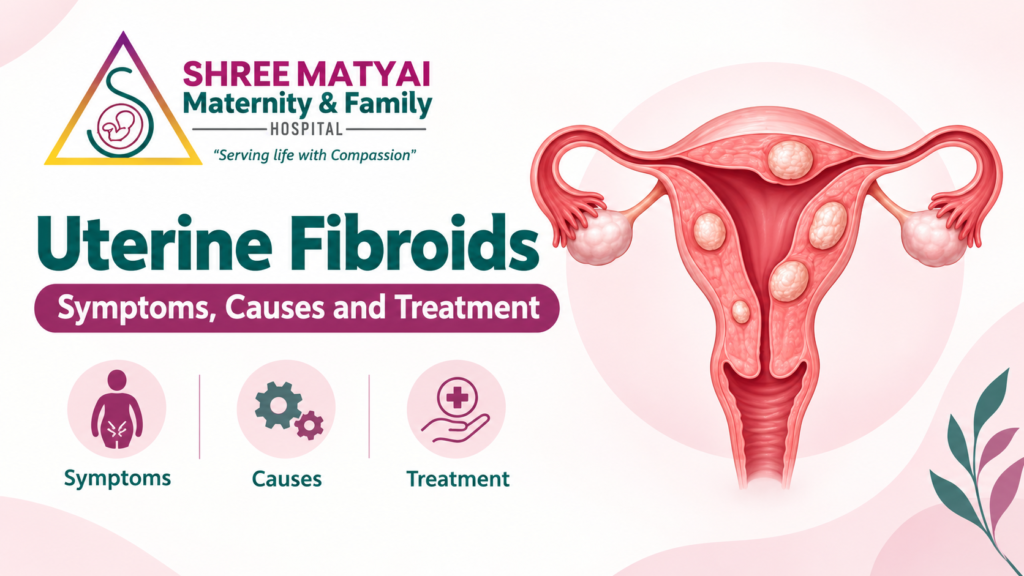
Uterine fibroids are non-cancerous growths that develop in or around the uterus and are common during the reproductive years. Some women have no noticeable symptoms, while others may experience heavy menstrual bleeding, pelvic pressure, painful periods, or fertility-related concerns.
Understanding the symptoms and available treatment options can help women seek timely medical advice. If menstrual problems are affecting daily life, Menstrual Disorders Treatment in Sector 102 Gurgaon at Shree Matyai Hospital can provide appropriate evaluation and care.
Uterine Fibroids: What Are They?
These growths develop from the muscle and connective tissue of the uterus. They can vary considerably in size, number, and location. Some remain small and cause no problems, while others can become large enough to put pressure on nearby organs or interfere with normal menstrual patterns.
Where Do Fibroids Develop?
Fibroids are generally classified according to where they grow:
- Intramural fibroids: These develop within the muscular wall of the uterus and are among the most common types.
- Submucosal fibroids: These grow toward the inner cavity of the uterus and may contribute to heavy menstrual bleeding.
- Subserosal fibroids: These develop on the outer surface of the uterus and may cause pressure or discomfort as they enlarge.
Are Fibroids Cancerous?
Most fibroids are benign, meaning they are not cancerous. They are also different from uterine cancer. However, persistent or unusual symptoms should not be self-diagnosed. A gynecologist can determine whether fibroids or another condition is responsible for the symptoms.
Common Symptoms of Uterine Fibroids
The symptoms can differ depending on the size, location, and number of growths. Some women may not experience symptoms at all, while others can have symptoms that interfere with work, sleep, exercise, or everyday activities.
Common signs include:
- Heavy or prolonged menstrual bleeding
- Periods that occur with significant cramping or discomfort
- Pelvic pain or pressure
- Lower back pain
- Frequent urination due to pressure on the bladder
- Constipation or difficulty with bowel movements
- Pain during sexual intercourse
- Abdominal enlargement or a feeling of fullness
- Tiredness associated with anemia caused by prolonged heavy bleeding
Heavy menstrual bleeding deserves particular attention because repeated blood loss can contribute to iron-deficiency anemia. Symptoms such as unusual fatigue, weakness, dizziness, or shortness of breath should be discussed with a healthcare professional.
What Causes Uterine Fibroids?
The exact cause is not completely understood. However, several factors appear to influence their development and growth.
Hormonal activity, particularly estrogen and progesterone, plays an important role because fibroids often grow during the reproductive years and may change after menopause. Genetic factors may also contribute, as women with a close family history may have a higher likelihood of developing them.
Other factors being studied include age, body weight, lifestyle factors, and certain reproductive or hormonal characteristics. Having one risk factor does not mean that a woman will definitely develop fibroids.
How Are Fibroids Diagnosed?
Diagnosis usually begins with a discussion about menstrual history, symptoms, medical history, and family history. A pelvic examination may also be performed when appropriate.
Ultrasound is commonly used to identify the size, number, and location of fibroids. Depending on the symptoms and clinical situation, a doctor may recommend additional imaging, such as magnetic resonance imaging (MRI), to obtain more detailed information.
Blood tests may also be useful when heavy menstrual bleeding is present, particularly to check for anemia. The appropriate tests depend on the individual’s symptoms and medical history.
Treatment Options for Uterine Fibroids
Treatment is not always necessary when fibroids are small and do not cause significant symptoms. When symptoms are troublesome, treatment depends on factors such as age, symptom severity, fibroid size and location, overall health, and whether future pregnancy is desired.
Medicines and Symptom Management
Medication may help control certain symptoms. Depending on the situation, doctors may recommend medicines that reduce heavy bleeding or relieve menstrual pain. Some hormonal treatments can also influence bleeding and fibroid-related symptoms.
Treatment should be individualized because medicines are not suitable for everyone. A gynecologist can explain potential benefits, side effects, and alternatives before treatment begins.
Minimally Invasive and Surgical Treatments
When symptoms are severe or do not respond adequately to medication, procedures may be considered. Options can include uterine artery embolization, myomectomy, or other minimally invasive approaches in selected patients.
A myomectomy removes fibroids while preserving the uterus and may be considered for women who wish to maintain fertility, although suitability depends on individual circumstances. A hysterectomy removes the uterus and provides definitive treatment for fibroids, but it eliminates the possibility of carrying a future pregnancy.
The best approach depends on the patient’s goals, symptoms, fibroid characteristics, and medical assessment. Shree Matyai Hospital can help women discuss appropriate gynecological evaluation and treatment options based on their individual needs.
When Should You See a Gynecologist?
Women should consider medical evaluation when menstrual bleeding becomes unusually heavy, periods last longer than expected, pelvic pressure persists, or pain begins interfering with normal activities.
Seek prompt medical attention for very heavy bleeding accompanied by severe weakness, dizziness, fainting, intense pain, or other concerning symptoms.
Regular gynecological care can also help identify menstrual or reproductive health concerns before they become more disruptive. Keeping a simple record of cycle dates, bleeding intensity, pain, and other symptoms can make a consultation more productive.
Practical Tips for Managing Symptoms
While lifestyle measures cannot remove fibroids, they can support overall well-being and help women manage some effects of heavy bleeding.
- Track menstrual cycles and bleeding patterns.
- Discuss persistent heavy bleeding with a gynecologist.
- Ask about iron levels if heavy periods are causing fatigue or weakness.
- Maintain a balanced diet containing iron-rich foods.
- Stay physically active according to your comfort level.
- Take prescribed medicines exactly as directed.
- Attend recommended follow-up appointments.
- Avoid delaying evaluation when symptoms become persistent or progressively worse.
Quick Takeaways
- Fibroids are usually benign growths that develop in or around the uterus.
- Some women have no symptoms, while others experience heavy bleeding, pelvic pressure, or pain.
- Hormones and genetic factors can influence their development.
- Ultrasound is commonly used during diagnosis.
- Treatment depends on symptoms, fibroid characteristics, health status, and reproductive goals.
- Medication, minimally invasive procedures, and surgery may all have a role in appropriate cases.
Conclusion
Uterine fibroids can range from completely symptom-free growths to conditions that significantly affect menstrual health and everyday comfort. Recognizing changes such as unusually heavy bleeding, persistent pelvic pressure, or recurring pain can encourage timely evaluation rather than prolonged self-management.
Diagnosis and treatment should always be based on individual symptoms, medical history, and reproductive goals. For professional gynecological evaluation and personalized care, visit Shree Matyai Hospital.
Frequently Asked Questions
1. Can fibroids cause heavy periods?
Yes. Fibroids, particularly those affecting the inner uterine cavity, can contribute to heavier or prolonged menstrual bleeding.
2. Can fibroids affect fertility?
Some fibroids may affect fertility depending on their size and location. A gynecologist can assess whether treatment may be appropriate when pregnancy is being planned.
3. Do fibroids always require treatment?
No. Small growths that cause no symptoms may only require monitoring. Treatment is generally considered when symptoms become troublesome, or complications develop.
4. Can fibroids go away naturally?
Fibroids may shrink after menopause when hormone levels decline, but they do not reliably disappear without treatment. Their behavior varies between individuals.
5. Is surgery always needed for fibroids?
No. Surgery is only one possible treatment. Depending on symptoms and individual circumstances, observation, medication, or minimally invasive procedures may be considered.