Foods to Eat and Avoid During Pregnancy

First Trimester Pregnancy Care: Essential Tips for Expecting Mothers
October 20, 2026
First Trimester Pregnancy Care: Essential Tips for a Healthy Start
October 26, 2026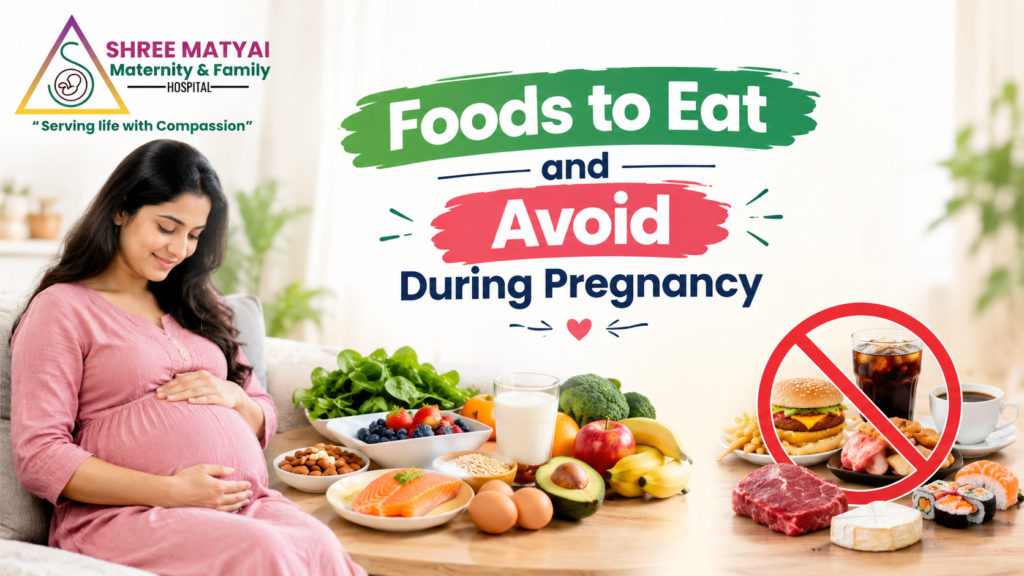
Pregnancy is an important time to focus on balanced nutrition, as the food you eat supports your health and your baby’s growth and development. Knowing which foods to eat and avoid during pregnancy can help you meet your nutritional needs, reduce the risk of foodborne infections, and make healthier daily choices.
With guidance from experienced healthcare professionals at Shree Matyai Hospital, expectant mothers can make informed decisions about their diet and overall well-being. For personalised guidance, consult the team for Pregnancy Care in Sector 102 Gurgaon.
Why Is a Healthy Diet Important During Pregnancy?
A balanced pregnancy diet provides essential nutrients that support the development of your baby’s brain, bones, organs, and tissues. It also helps maintain the mother’s energy levels and supports healthy changes in the body. During pregnancy, nutritional requirements change, and some nutrients become especially important. Instead of eating for two, focus on the quality, variety, and safety of the foods you consume. Key nutrients include:
- Folic acid: Supports early brain and spinal cord development.
- Iron: Helps produce red blood cells and supports oxygen delivery.
- Calcium: Supports the development of your baby’s bones and teeth.
- Protein: Helps build and repair body tissues.
- Omega-3 fatty acids: Support fetal brain and eye development.
- Iodine: Supports normal thyroid function and brain development. A healthcare professional can recommend appropriate prenatal supplements based on your diet, medical history, and individual requirements.
Best Foods to Eat During Pregnancy
Choosing a variety of nutrient-rich foods helps support healthy fetal development and maternal health. Include different food groups in your daily meals rather than relying on a single food for nutrition.
1. Fruits and Vegetables
Fresh fruits and vegetables provide vitamins, minerals, antioxidants, and fibre. They can also help manage constipation, which is common during pregnancy.
- Fruits: Oranges, apples, bananas, guavas, pears, and berries.
- Vegetables: Spinach, carrots, broccoli, pumpkin, and sweet potatoes.
- Practical tip: Wash fruits and vegetables thoroughly under clean running water before eating or cutting them. Avoid unwashed produce and raw sprouts.
2. Whole Grains and Fibre-Rich Foods
Whole grains supply energy, B vitamins, and fibre. They can help support digestion and maintain steady energy levels throughout the day.
- Choose whole-wheat chapati, oats, brown rice, millet, and whole-grain bread.
- Include fibre-rich foods such as beans, lentils, chickpeas, and peas.
- Combine whole grains with vegetables and protein for balanced meals.
3. Protein-Rich Foods
Protein supports the growth of your baby’s tissues and organs. Include a variety of protein sources based on your dietary preferences.
- Vegetarian options: Dal, rajma, chickpeas, tofu, paneer made from pasteurised milk, and well-cooked beans.
- Non-vegetarian options: Fully cooked eggs, chicken, lean meat, and low-mercury fish.
- Additional choices: Nuts, seeds, and nut butters can provide protein and healthy fats.
4. Calcium-Rich Foods and Dairy Products
Calcium supports the development of your baby’s bones and teeth while helping maintain your own bone health.
- Choose pasteurised milk, yoghurt, paneer, and other safe dairy products.
- Include calcium-rich alternatives such as calcium-fortified soy milk, tofu prepared with calcium, and selected leafy greens.
- Ask your healthcare provider whether you need a calcium supplement, particularly if your dietary intake is low.
5. Iron and Folic Acid Sources
Iron helps prevent iron-deficiency anaemia, while folic acid supports early neural tube development.
- Iron sources: Lentils, beans, leafy greens, lean meat, and iron-fortified cereals.
- Folate sources: Green vegetables, citrus fruits, beans, and peas.
- Helpful tip: Pair plant-based iron sources with vitamin C-rich foods, such as guava, oranges, or tomatoes, to improve iron absorption. Food alone may not provide enough folic acid or iron during pregnancy. Follow your clinician’s advice about prenatal supplements and the appropriate dosage.
Foods to Avoid During Pregnancy
Some foods can carry harmful bacteria or parasites, while others may contain substances that can affect your baby’s development. Knowing which foods to avoid during pregnancy can help reduce preventable risks.
1. Raw or Undercooked Meat, Eggs, and Seafood
Avoid raw or undercooked chicken, meat, eggs, fish, and shellfish because they may contain harmful germs.
- Cook eggs until both the yolk and white are firm.
- Ensure meat and poultry are thoroughly cooked.
- Avoid raw fish sushi, sashimi, and raw shellfish.
- Choose freshly prepared seafood that is cooked thoroughly.
2. Unpasteurised Milk and Unsafe Dairy Products
Raw milk and dairy products made from unpasteurised milk may carry bacteria that cause serious infections during pregnancy.
- Choose pasteurised milk, yoghurt, and cheese.
- Check product labels, particularly for packaged dairy products.
- Avoid dairy products made with unpasteurised milk unless they are safely cooked as advised by recognised food safety guidance.
3. High-Mercury Fish
Fish provides protein and omega-3 fatty acids, but certain species contain high levels of mercury, which can affect a baby’s developing nervous system. Avoid high-mercury fish such as shark, swordfish, marlin, and king mackerel. Choose lower-mercury options, such as salmon, sardines, shrimp, or other locally available safe fish. Follow local fish advisories and pregnancy-specific seafood guidance for appropriate serving amounts.
4. Alcohol and Excessive Caffeine
Alcohol should be avoided throughout pregnancy because no safe amount has been established. Caffeine should be limited to less than 200 mg per day, unless your healthcare provider recommends otherwise. Remember that caffeine is found in tea, coffee, chocolate, cola, energy drinks, and some medicines. Energy drinks are best avoided during pregnancy because of their caffeine and other stimulant ingredients.
5. Unwashed Produce and Raw Sprouts
Unwashed fruits and vegetables can carry soil, parasites, or harmful bacteria. Raw sprouts, including mung bean and alfalfa sprouts, can also contain bacteria that are difficult to remove through washing. Wash produce thoroughly and cook sprouts until steaming hot. Keep prepared foods refrigerated and avoid food that has been stored improperly or left at unsafe temperatures.
Healthy Eating Tips for Every Stage of Pregnancy
A nutritious diet is not just about selecting healthy ingredients. Food preparation, portion sizes, hydration, and individual medical needs also matter.
Follow a Balanced Daily Meal Plan
Try to include carbohydrates, protein, healthy fats, fruits, and vegetables across your meals. A simple Indian-style meal plan could include:
- Breakfast: Vegetable poha, oats, or well-cooked eggs with whole-wheat toast.
- Mid-morning: A washed fruit and a handful of nuts.
- Lunch: Chapati or brown rice with dal, cooked vegetables, and pasteurised curd.
- Evening snack: Roasted chana, yoghurt, or fruit.
- Dinner: Chapati with cooked vegetables and paneer, beans, chicken, or another suitable protein source.
- Fluids: Drink water regularly throughout the day. This is a general example, not an individual prescription. Your requirements may differ depending on your stage of pregnancy, activity level, health conditions, and nutritional status.
Practise Safe Food Preparation
Food safety is especially important during pregnancy because certain foodborne infections can cause serious complications. Shree Matyai Hospital encourages expectant mothers to discuss any dietary concerns with their healthcare provider and follow personalised pregnancy care advice. Keep these habits in mind:
- Wash your hands before preparing or eating food.
- Keep raw meat separate from cooked foods and fresh produce.
- Cook meat, eggs, and seafood thoroughly.
- Refrigerate perishable foods promptly and follow storage instructions.
- Avoid unpasteurised drinks and products.
- Check the labels and expiry dates of packaged foods.
Common Pregnancy Nutrition Mistakes to Avoid
Even when choosing healthy foods, some habits may make it harder to meet nutritional needs.
- Skipping meals: If nausea makes large meals difficult, try smaller, more frequent meals.
- Taking supplements without advice: Excessive doses of certain vitamins, particularly preformed vitamin A, can be harmful. Use supplements recommended by your healthcare provider.
- Following restrictive diets: Avoid eliminating major food groups without professional guidance, as this may lead to nutritional deficiencies.
- Relying on sugary snacks: Choose nutrient-dense snacks more often than foods high in added sugar and saturated fat.
- Ignoring unusual cravings: Craving non-food substances such as clay, soil, or chalk should be discussed with a healthcare professional.
When Should You Seek Pregnancy Nutrition Advice?
Every pregnancy is different. A healthcare professional can help you plan meals and supplements according to your nutritional needs, pregnancy stage, and medical history. Seek professional advice if you have persistent vomiting, difficulty keeping fluids down, suspected food poisoning, significant dietary restrictions, anaemia, gestational diabetes, or concerns about weight gain. Prompt assessment is particularly important if you develop signs of dehydration or feel seriously unwell.
Conclusion
Understanding which foods to eat and avoid during pregnancy helps expectant mothers make safer, healthier choices throughout this important journey. Prioritise fresh produce, whole grains, protein-rich foods, and pasteurised dairy products while avoiding alcohol, high-mercury fish, raw or undercooked foods, and other recognised food safety risks.
Maintain regular antenatal appointments and seek advice before starting supplements or making major dietary changes. For personalised pregnancy guidance and support, consult the healthcare team at Shree Matyai Hospital.
Frequently Asked Questions
1. Which foods are best during pregnancy?
Fruits, vegetables, whole grains, lentils, beans, nuts, pasteurised dairy products, and thoroughly cooked protein sources are nutritious choices.
2. Which foods should I avoid during pregnancy?
Avoid alcohol, raw or undercooked meat and seafood, unpasteurised dairy products, high-mercury fish, and unwashed produce.
3. Can I drink tea or coffee during pregnancy?
Generally, caffeine should be limited to less than 200 mg daily. Count caffeine from all sources, including tea, coffee, chocolate, and soft drinks.
4. Is papaya safe to eat during pregnancy?
Fully ripe papaya is generally considered safe in normal food amounts. Unripe or semi-ripe papaya is best avoided because of concerns about latex content and limited safety evidence.
5. Do I need supplements during pregnancy?
Many pregnant women need folic acid and may need iron, calcium, vitamin D, or other supplements depending on their individual needs. Consult your healthcare provider for appropriate recommendations.