PCOS and Fertility: Can You Get Pregnant With PCOS?

Heavy Periods: Causes and Treatment Options in Dhankot, Gurgaon
September 18, 2026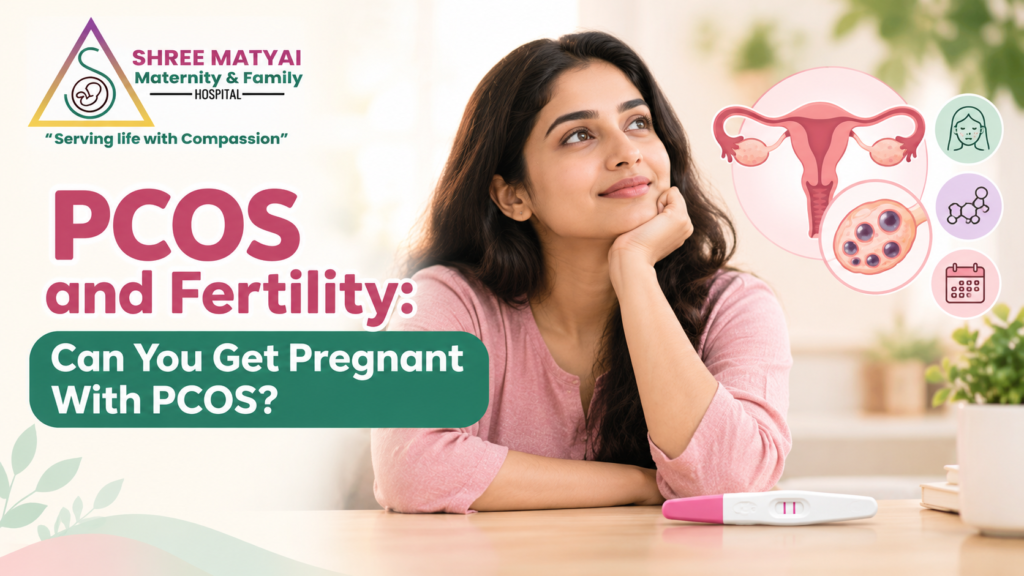
Yes, many women with PCOS can get pregnant. Polycystic ovary syndrome (PCOS) can affect ovulation and make conception more difficult for some women, but it does not necessarily mean infertility. With appropriate evaluation, lifestyle measures, ovulation-focused treatment, and medical guidance, many women with PCOS go on to have healthy pregnancies. At Shree Matyai Hospital, women can discuss fertility concerns, menstrual irregularities, and pregnancy planning with a qualified healthcare professional. If you are looking for PCOS Treatment in Sector 102 Gurgaon, a personalized assessment can help identify the factors affecting ovulation and fertility.
What Is PCOS?
Polycystic ovary syndrome is a common hormonal condition that can affect reproductive-age women. It is often associated with irregular menstrual cycles, higher levels or effects of androgens, and polycystic-appearing ovaries on ultrasound. However, not every woman with PCOS has all three features.
PCOS can affect the regular release of an egg from the ovary. When ovulation occurs less frequently or unpredictably, it may take longer to become pregnant. Other factors, including age, sperm health, fallopian tube health, body weight, thyroid function, and other reproductive conditions, can also influence fertility.
Can You Get Pregnant With PCOS?
Yes. Having PCOS does not automatically prevent pregnancy. The main challenge is often irregular or absent ovulation rather than an inability to conceive permanently.
Some women with PCOS ovulate regularly and become pregnant without fertility treatment. Others may need support to regulate ovulation. The appropriate approach depends on the individual’s menstrual pattern, medical history, age, fertility goals, and results of fertility evaluation.
Understanding PCOS and fertility begins with recognizing that the condition affects women differently. A diagnosis of PCOS alone cannot predict whether someone will become pregnant or how long conception may take.
How Does PCOS Affect Fertility?
The connection between PCOS and fertility is primarily related to ovulation. Hormonal changes associated with PCOS can interfere with the normal development and release of an egg.
Common ways PCOS may affect conception include:
- Irregular ovulation: Ovulation may occur less frequently or at unpredictable times.
- Irregular periods: Longer or unpredictable cycles can make it difficult to identify the fertile window.
- Hormonal imbalance: Increased androgen activity can interfere with normal ovarian function.
- Insulin resistance: Some women with PCOS have insulin resistance, which can contribute to hormonal changes and ovulatory problems.
It is also important to remember that PCOS is only one possible factor affecting conception. Fertility evaluation may consider both partners when pregnancy does not occur as expected.
Signs That PCOS May Be Affecting Ovulation
Women trying to conceive may notice certain signs that suggest irregular ovulation. These can include periods that occur very far apart, skipped periods, unpredictable cycle lengths, or difficulty identifying ovulation.
Some women may also experience acne, increased facial or body hair, or scalp hair thinning. These symptoms can be associated with hormonal changes but do not by themselves confirm PCOS.
If menstrual cycles are consistently irregular, discussing them with a gynecologist can be useful before actively trying to conceive. Identifying the underlying cause can help determine the most appropriate next step.
How Is Fertility Evaluated in Women With PCOS?
A fertility assessment usually starts with a detailed medical and menstrual history. A healthcare professional may ask about cycle length, previous pregnancies, medications, lifestyle factors, and how long the couple has been trying to conceive.
Depending on the situation, evaluation may include:
- Hormonal blood tests
- Blood glucose or metabolic assessment
- Pelvic ultrasound
- Ovulation assessment
- Evaluation of the fallopian tubes when appropriate
- Semen analysis for the male partner
This broader evaluation is important because difficulty conceiving is not always caused by PCOS alone.
Treatment Options for Pregnancy With PCOS
Treatment for PCOS and fertility depends on the reason conception is difficult. The goal is generally to support healthy ovulation and address other factors that may affect pregnancy.
Lifestyle and Weight Management
For women who are overweight and have PCOS, gradual, sustainable weight management may improve metabolic health and help restore more regular ovulation. However, PCOS can occur in women of every body size, so treatment should not be based solely on weight.
Regular physical activity, balanced nutrition, adequate sleep, and management of metabolic risk factors can form an important part of fertility planning.
Ovulation-Inducing Medication
When irregular or absent ovulation is the main fertility issue, a doctor may recommend medication to help stimulate ovulation. Letrozole is commonly recommended as a first-line pharmacological treatment for ovulation induction in many women with PCOS who are trying to conceive, while other medicines may be considered depending on individual circumstances.
These medications should only be used under medical supervision because monitoring and dose selection are important.
Fertility Treatments
If ovulation-induction treatment does not result in pregnancy, or if additional fertility factors are present, a fertility specialist may discuss options such as intrauterine insemination (IUI) or in vitro fertilization (IVF). The appropriate treatment depends on the individual’s fertility assessment.
Can PCOS Cause Pregnancy Complications?
Women with PCOS can have healthy pregnancies, but some studies have found increased risks of certain pregnancy complications, including gestational diabetes, high blood pressure disorders, and pregnancy-related complications in some women.
This does not mean that complications will definitely occur. Good prenatal care, appropriate screening, healthy lifestyle habits, and management of existing medical conditions can help support maternal and fetal health.
Once pregnancy occurs, regular prenatal appointments are important. Any medications used before pregnancy should also be reviewed with a healthcare professional.
Practical Tips When Trying to Conceive With PCOS
If you have PCOS and are planning pregnancy, consider these practical steps:
- Track your menstrual cycles: Record periods and changes in cycle length.
- Discuss irregular periods: Very irregular cycles may indicate that ovulation is not occurring consistently.
- Schedule a preconception consultation: Review medications, existing health conditions, vaccinations, and nutritional needs.
- Maintain healthy habits: Focus on balanced nutrition, regular activity, sufficient sleep, and sustainable weight management when appropriate.
- Do not self-medicate: Fertility medicines and hormonal treatments should be prescribed and monitored by a qualified professional.
- Consider both partners: Fertility evaluation may need to assess male and female factors rather than focusing only on PCOS.
When Should You See a Doctor?
You do not necessarily need to wait a full year before seeking advice if you have very irregular or absent periods. A healthcare professional can help determine whether ovulation is occurring and whether evaluation should begin earlier.
For women without known fertility problems, fertility evaluation is generally recommended after 12 months of regular unprotected intercourse when the woman is under 35, and after 6 months when she is 35 or older. Earlier assessment may be appropriate when there are known reproductive concerns or significant menstrual irregularities.
Quick Takeaways
- PCOS does not automatically mean infertility.
- Irregular or absent ovulation is a common reason PCOS can make conception more difficult.
- Many women with PCOS conceive naturally or with appropriate fertility treatment.
- Lifestyle measures can support overall reproductive and metabolic health.
- Ovulation-inducing medicines may be recommended when appropriate.
- Fertility evaluation should consider both partners and other possible causes.
- Medical guidance is especially important when planning pregnancy with PCOS.
Frequently Asked Questions
1. Can I get pregnant naturally with PCOS?
Yes. Some women with PCOS ovulate regularly or occasionally and become pregnant naturally. Others may need treatment to support ovulation.
2. Does PCOS mean I am infertile?
No. PCOS can make conception more difficult because of irregular ovulation, but it does not automatically mean permanent infertility.
3. How can I improve my chances of pregnancy with PCOS?
Maintaining healthy lifestyle habits, tracking menstrual cycles, managing metabolic health, and seeking medical evaluation can help. If ovulation is irregular, a doctor may recommend appropriate fertility treatment.
4. Is fertility treatment always required for PCOS?
No. Some women conceive without fertility treatment. Treatment is considered when ovulation is irregular or when other factors are affecting conception.
5. When should I consult a doctor about PCOS and pregnancy?
Consider an earlier consultation if periods are very irregular or absent, or if you have known reproductive concerns. Otherwise, fertility evaluation is commonly considered after 12 months of trying if under 35, or after 6 months if 35 or older.
Conclusion
PCOS and fertility concerns can understandably create uncertainty for women planning a pregnancy, but a PCOS diagnosis does not mean that pregnancy is impossible. The key is to identify whether irregular ovulation or another fertility factor is affecting conception and then choose an appropriate, medically supervised approach.
With individualized evaluation, healthy lifestyle habits, ovulation management, and fertility care when needed, many women with PCOS can move forward with pregnancy planning. Shree Matyai Hospital can provide an opportunity to discuss menstrual concerns, fertility planning, and pregnancy-related questions with a qualified healthcare professional. Early guidance can help you understand your reproductive health and make informed decisions about the next steps.