Contraception Options for Women: A Complete Guide

Urinary Infections in Women: 7 Signs You Should Never Ignore
August 22, 2026
When Is the Best Time to Plan a Pregnancy?
August 27, 2026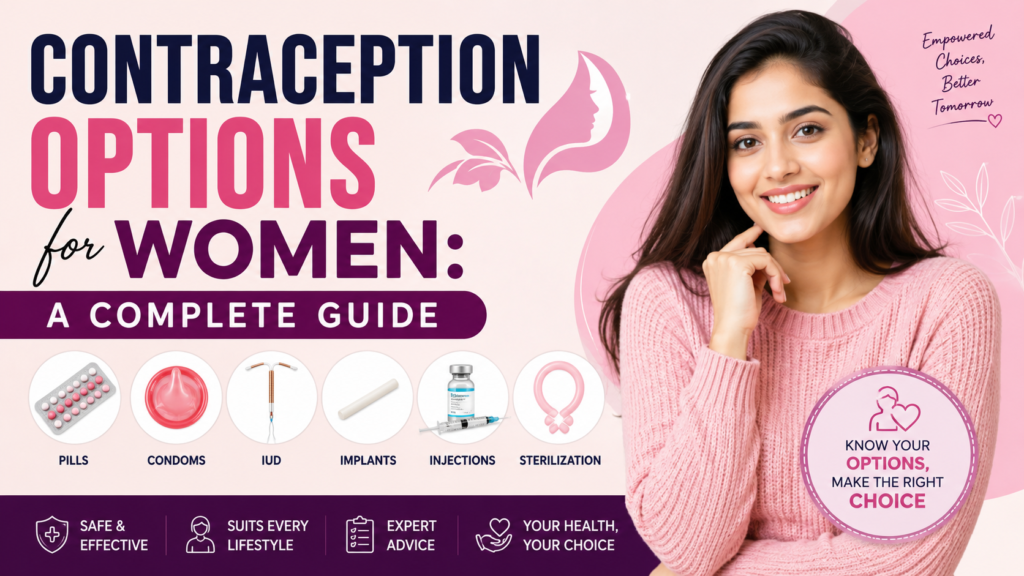
Choosing a contraceptive method is a personal decision influenced by health, age, relationship status, future pregnancy plans, convenience, and individual preferences. Understanding the available contraception options can help women make informed decisions with a qualified healthcare professional.
At Shree Matyai Hospital, a Family Health Consultation in Sector 102 Gurgaon can also help women discuss concerns such as menstrual patterns, previous pregnancies, medications, and long-term reproductive goals. This guide explains common birth control methods, their benefits, limitations, and factors to consider before choosing one.
See more: Urinary Infections in Women: 7 Signs You Should Never Ignore
What Are Contraception Options and How Do They Work?
Contraception options are methods used to prevent pregnancy. They work in different ways, including preventing ovulation, stopping sperm from reaching an egg, creating a barrier, or preventing fertilization. Some methods are used every time during sexual activity, while others provide protection for months or years.
The main categories include hormonal contraception, barrier methods, intrauterine devices, permanent contraception, fertility-awareness methods, and emergency contraception. The right choice depends on effectiveness, convenience, side effects, medical history, and whether pregnancy is desired in the future.
Quick takeaway: No single birth control method is ideal for every woman. A method that works well for one person may not be suitable for another.
Hormonal Birth Control Methods for Everyday Pregnancy Prevention
Hormonal birth control methods use hormones such as estrogen, progestin, or both to prevent pregnancy. Common choices include birth control pills, contraceptive patches, vaginal rings, injections, and hormonal implants.
Birth control pills are taken regularly and may also make periods more predictable or reduce menstrual cramps for some women. However, they require consistent use. The contraceptive patch and vaginal ring can reduce the need for daily medication, while injections provide protection for several months.
The contraceptive implant is a small, flexible device placed under the skin of the upper arm. It provides long-lasting pregnancy prevention without requiring daily attention. Hormonal methods may cause temporary effects such as irregular bleeding, breast tenderness, headaches, or mood changes in some users.
Women with certain medical conditions, particularly those involving blood-clot risk, migraines with aura, or specific cardiovascular problems, may need to avoid some estrogen-containing methods. A healthcare professional should review individual risks before prescribing hormonal contraception.

IUDs and Implants Offer Long-Acting Birth Control Choices
Long-acting reversible contraception, often called LARC, includes intrauterine devices and contraceptive implants. These are among the most effective reversible contraception options because they require little ongoing action after placement.
Hormonal IUDs release a small amount of progestin and can provide contraception for several years, depending on the specific device. They may also reduce heavy menstrual bleeding for some women. Copper IUDs do not contain hormones and can provide long-term pregnancy prevention. They may increase menstrual bleeding or cramps, especially during the first few months.
An implant is inserted beneath the skin and steadily releases a progestin hormone. Fertility generally returns quickly after removal. These methods are reversible, meaning a woman can discontinue them when she wants to pursue pregnancy.
Because insertion and removal require a trained healthcare professional, women should discuss possible risks, benefits, expected bleeding changes, and personal medical history before choosing a device.
Barrier Methods and Condoms Provide Extra Protection
Barrier methods prevent sperm from entering the reproductive tract. External condoms and internal condoms are widely available, while diaphragms and cervical caps are other barrier-based approaches.
Condoms have an important advantage: they can help reduce the transmission of sexually transmitted infections (STIs), something most other contraceptive methods do not provide. For this reason, condoms can be useful even when another form of birth control is being used.
Correct and consistent use is essential. Using a new condom for every act of vaginal, anal, or oral sex where appropriate, checking the package and expiration date, and avoiding oil-based products with latex condoms can reduce the risk of breakage.
For people seeking both pregnancy prevention and STI protection, combining condoms with another reliable contraceptive method can provide broader protection.
Emergency Contraception Can Help After Unprotected Sex
Emergency contraception is designed to reduce the chance of pregnancy after unprotected sex or when contraception fails, such as after a condom breaks or several birth control pills are missed.
Emergency contraceptive pills work best when taken as soon as possible, although effectiveness depends on the specific product and timing. A copper IUD can also be used as emergency contraception when inserted by a qualified healthcare professional within the appropriate timeframe.
Emergency contraception should not be confused with abortion medication. It works primarily by preventing or delaying ovulation and does not terminate an established pregnancy.
It is intended as a backup rather than a replacement for regular birth control. If emergency contraception is needed repeatedly, discussing other contraception options with a healthcare professional may help identify a more convenient and reliable long-term method.
Choosing Contraception Based on Your Health and Lifestyle
The best contraception options depend on more than effectiveness alone. Consider how frequently you want to think about contraception, whether you want hormones, your menstrual preferences, possible side effects, cost and availability, and whether you want pregnancy within the next few months or several years.
Women should tell their healthcare provider about existing medical conditions, medications, smoking status, migraine history, previous blood clots, breastfeeding, and any previous problems with contraception. These details can affect which methods are appropriate.
For example, someone who struggles to remember daily medication may prefer a long-acting method. Someone who wants to avoid hormones may consider a copper IUD or barrier method. Someone concerned about STI exposure should consider condoms regardless of the chosen pregnancy-prevention method.
At Shree Matyai Hospital, women can discuss reproductive health concerns with an appropriate healthcare professional and explore options according to their individual circumstances.

Understanding Effectiveness, Side Effects, and Common Concerns
Effectiveness varies significantly between contraceptive methods. Long-acting methods generally have very high effectiveness because they eliminate the need for daily or per-use action. Pills, patches, rings, and condoms can also work very well when used correctly, but missed doses or inconsistent use can reduce protection.
Side effects differ from person to person. Changes in bleeding patterns are common with several hormonal methods, while copper IUDs may increase menstrual bleeding. Some women experience headaches, nausea, breast tenderness, or mood changes with hormonal contraception.
It is important not to stop a method solely because of something seen online without discussing it with a healthcare professional. Persistent or severe symptoms require medical evaluation. Sudden chest pain, difficulty breathing, severe abdominal pain, unusual neurological symptoms, or significant bleeding warrant prompt medical attention.
Practical Tips for Selecting the Right Birth Control
Before selecting among different contraception options, ask yourself:
- Do I want a method that lasts for years or something I control daily?
- Do I want to use hormones or avoid them?
- Do I need protection against STIs?
- Could I remember a pill every day?
- Do I want children in the near future?
- Have I experienced side effects from contraception previously?
- Could any medications or health conditions affect my choice?
A useful approach is to discuss these questions during a medical consultation rather than relying solely on social media or advertisements. Keep track of menstrual changes and side effects after starting a new method, and attend recommended follow-up appointments.
Can Contraception Affect Future Fertility and Pregnancy?
A common concern is whether birth control permanently affects fertility. Most reversible contraception options do not cause permanent infertility. Fertility generally returns after stopping or removing most reversible methods, although the timing can vary.
For some methods, such as contraceptive injections, the return to regular ovulation may take longer than with other methods. This does not necessarily indicate permanent fertility problems.
Women planning pregnancy should speak with their healthcare professional about when to stop contraception, preconception health, medications, nutrition, and recommended prenatal supplements. Those who are not planning pregnancy can also review their method periodically as circumstances change.
Key Takeaways for Safe and Informed Contraceptive Choices
The best contraception options are those that fit a woman’s health needs, reproductive goals, lifestyle, and personal preferences. Hormonal methods, IUDs, implants, condoms, barrier methods, and emergency contraception each have different advantages and limitations.
No contraceptive method is completely free of considerations, and effectiveness depends on the method and how it is used. Condoms remain particularly important for STI prevention, while long-acting methods can offer highly effective pregnancy prevention with minimal maintenance.
Women should avoid choosing a method solely because it is popular or recommended by someone else. A personalized medical discussion provides a safer way to compare benefits, risks, effectiveness, side effects, and alternatives.
For individualized reproductive health guidance, Shree Matyai Hospital can be considered as part of a discussion with a qualified healthcare professional about contraception, family planning, and overall women’s health.